
Best Refrigerators 2026: Complete Comparison of Inverter Models, Cubic Feet vs Liters & Energy Efficiency
Selecting the best refrigerators in 2026 represents a critical engineering and financial commitment for any household across the Middle East. Because a refrigerator operates uninterrupted twenty-four hours a day, three hundred and sixty-five days a year, performance evaluation extends far beyond exterior aesthetics, stainless steel finishes, or door configurations. Discerning homeowners must evaluate thermodynamic compressor architecture, digital inverter variable-speed modulation, Saudi Standards, Metrology and Quality Organization (SASO) and Saudi Energy Efficiency Center (SEEC) efficiency tiers, tropical climate classifications, and precise volumetric conversions between cubic feet and liters.
In this comprehensive guide, we dissect the technical benchmarks separating industry-leading refrigeration brands in 2026, comparing flagship models from LG, Samsung, Hitachi, Bosch, and Toshiba. We also explain how to combine regional sales events with verified coupons from Wafarna, including the Samsung deals, the 2B promo code DD63, and verified promotions from Noon and Homzmart to secure maximum household savings.
Key Engineering Benchmark: Tropical Climate Class T
In Gulf and Middle Eastern climates where ambient summer kitchen temperatures routinely surpass 45 degrees Celsius, standard temperate-class refrigerators experience severe thermal overload and continuous compressor tripping. When purchasing a refrigerator, verify that the appliance bears an official Climate Class T (Tropical) rating, certifying steady internal thermodynamic cooling up to an ambient exterior temperature of 55 degrees Celsius without thermal compressor degradation.
Best Refrigerators 2026 Comparison Overview
The comparative engineering table below evaluates leading domestic refrigeration brands across compressor mechanics, cooling cycle technologies, volume capacity tiers, and estimated energy savings:
| Brand & Flagship Model Series | Compressor Architecture | Cooling & Humidity Systems | Energy Efficiency & Decibel Rating | Verified Wafarna Partner |
|---|---|---|---|---|
| LG InstaView & DoorCooling+ | Smart Inverter Linear Compressor (10-Year Warranty) | DoorCooling+ Multi-Air Flow & Hygiene Fresh+ 5-Stage UV Filter | SEEC Green Tier / 36 dB Silent Operation | Noon coupon code (Code BEE13) |
| Samsung Bespoke & Twin Cooling Plus | Digital Inverter Compressor (20-Year Warranty) | Twin Cooling Plus Independent Dual Evaporators (70% Humidity Retention) | SASO High Efficiency / 37 dB Quiet Run | Samsung promo code |
| Hitachi Dual Fan Inverter | High-Power Inverter Compressor (Eco Thermo Sensor) | Dual Fan Cooling with Nano Titanium Antibacterial Deodorization | Tropical Heavy-Duty Class / 38 dB | Amazon deals hub |
| Bosch Series 6 & 8 VitaFresh | VarioInverter German Engineered Compressor | VitaFresh Pro Humidity Zones & MultiAirflow Stainless Backing | European A+++ Equivalent / 35 dB Whisper Quiet | Homzmart promo code (Code HM42) |
| Toshiba & Sharp PlasmaCluster | Origin Inverter Dual System | PlasmaCluster Ion Purification & Pure BIO Deodorizer | High Economic Value Tier / 39 dB | 2B promo code (Code DD63) |
In-Depth Engineering Breakdown of Top Refrigerator Brands
1. LG InstaView and DoorCooling+ Lineup
LG maintains an authoritative position in Middle Eastern refrigeration through its Smart Inverter Linear Compressor technology. Unlike conventional rotary mechanisms that operate on rigid start-stop cycles generating mechanical friction, the linear piston mechanism uses a direct-drive movement with only one friction point. This architectural advantage cuts electrical energy consumption by up to 32% while dramatically reducing internal acoustic noise down to 36 decibels.
The integrated DoorCooling+ system deploys air ceiling ducts positioned directly above the door shelves, dropping temperature levels 35% faster than traditional rear-only airflow designs. For busy families, this ensures that milk cartons, condiments, and dairy kept in the door racks maintain optimal thermal preservation even during frequent door openings. Furthermore, the Hygiene Fresh+ 5-step air purification filter utilizes a carbon block and UV-LED photocatalyst to eliminate 99.999% of airborne bacteria and pungent odor molecules.
2. Samsung Twin Cooling Plus and Bespoke Series
Samsung's flagship technological advancement lies in its patented Twin Cooling Plus engineering. Conventional no-frost refrigerators utilize a shared single evaporator for both the freezer and refrigerator compartments. This single airflow loop extracts moisture from vegetables, lowering refrigerator humidity to a dry 30%, while circulating pungent fish and onion odors directly into ice cubes. Samsung's dual independent evaporators maintain an optimal 70% humidity level within the fresh food cavity, preserving crisp greens, berries, and herbs three times longer while completely preventing odor crossover.
Furthermore, Samsung provides an industry-leading 20-year warranty on its Digital Inverter Compressor, which automatically adjusts cooling speeds across seven continuous calibration levels in response to temperature demands. For households seeking personalized kitchen aesthetics, the Bespoke line allows modular glass and matte steel door panel replacements that integrate seamlessly with custom interior cabinetry.
3. Hitachi Dual Fan Inverter: Japanese Engineering for Harsh Climates
Hitachi refrigerators have long held a legendary reputation across Saudi Arabia and the Gulf for unmatched thermal durability under extreme ambient heat. Hitachi utilizes a dedicated Dual Fan Cooling system where two independent centrifugal fans dedicate high-volume air currents separately to the freezer and refrigeration sections. Paired with Eco Thermo Sensors, microprocessors continually modulate compressor displacement to ensure stable sub-zero freezing even when ambient kitchen environments exceed 50 degrees Celsius.
Hitachi's interior incorporates Nano Titanium catalytic deodorization filters and Vacuum Compartment options that depressurize fresh meat containers to 0.8 atmospheres, suppressing cellular oxidation and preserving raw protein nutrients without requiring complete cellular freezing.
4. Bosch VitaFresh Series 6 and 8: German Precision
Bosch represents the benchmark for thermal stability and food longevity through German precision engineering. The VitaFresh Pro storage system allows users to micro-calibrate humidity and temperature precisely between minus 1 degree Celsius and plus 3 degrees Celsius via digital touch controls. This creates optimal climate zones for fresh fish and red meat on one tier, while maintaining ultra-high humidity for delicate leafy salads on another.
Bosch's MultiAirflow system features an illuminated stainless steel interior rear wall that acts as a thermal cold-retaining heat sink, rapidly dissipating warm air introduced when the doors are opened. Operating at an ultra-whisper decibel level of 35 dB, Bosch is the undisputed choice for modern open-concept architectural residences.
Cubic Feet vs. Liters: Calculating the Correct Capacity for Your Household
One of the most persistent points of consumer confusion in the appliance market is the conversion between cubic feet and liters, alongside the crucial distinction between gross marketing capacity and net usable storage volume. Standard international conversion formulas dictate that:
1 Cubic Foot = 28.3168 Liters
| Commercial Foot Tier | Actual Net Volume (Liters) | Ideal Family Demographic | Spatial Footprint Recommendation |
|---|---|---|---|
| 12 to 14 Cubic Feet | 340 to 395 Liters | Couples & Small Families (1 to 3 Persons) | Compact kitchen spaces (Width: 60 - 68 cm) |
| 16 to 18 Cubic Feet | 450 to 510 Liters | Medium Households (4 to 5 Persons) | Standard domestic kitchens (Width: 70 - 78 cm) |
| 20 to 22 Cubic Feet | 560 to 620 Liters | Large Multi-Generational Families (6+ Persons) | Spacious kitchens (Width: 80 - 86 cm) |
| 24 to 28 Cubic Feet (Side-by-Side) | 680 to 790 Liters | Large Villas & Bulk Grocery Stockers | Expansive villa kitchens (Width: 90 - 95 cm) |
Always inspect the official energy label card on the appliance to verify the Net Storage Capacity rather than the gross exterior frame dimensions, ensuring that internal shelf layouts match your weekly grocery routines.
Choosing the Right Refrigerator Configuration
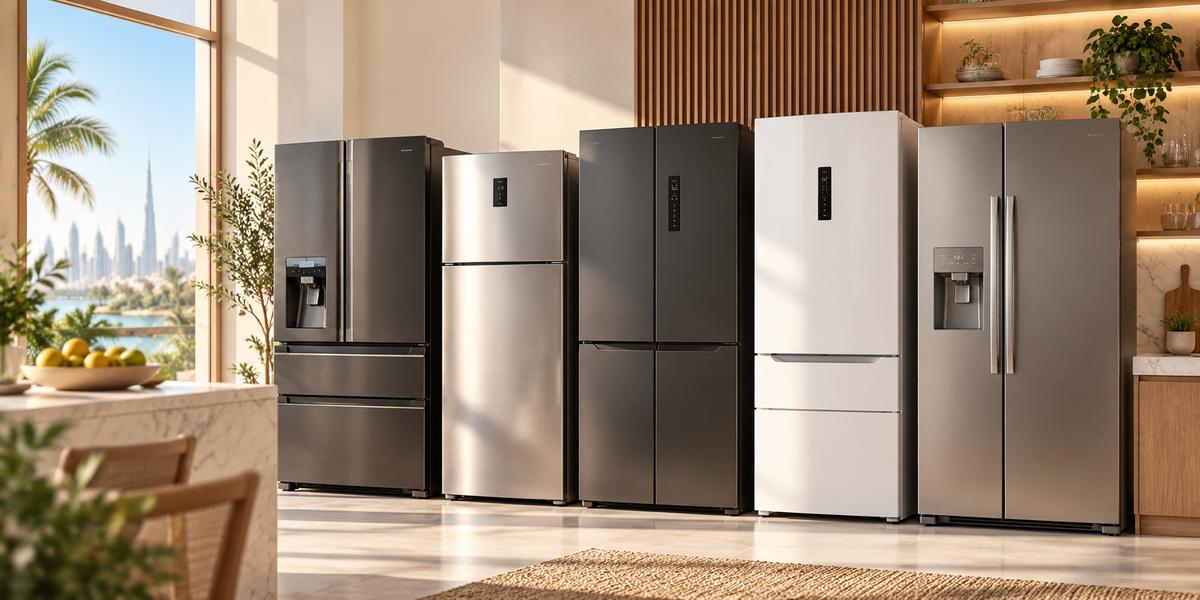
Modern refrigeration architectures fall into four primary structural designs, each addressing distinct spatial and ergonomic requirements:
- Top Freezer (Traditional Two-Door): The historical standard where the freezer sits above the refrigeration compartment. It offers the most economical purchase price, the lowest maintenance complexity, and superior thermodynamic energy efficiency, though it requires frequent bending to reach lower produce crispers.
- Bottom Freezer (Combi): Reverses traditional layouts by positioning the everyday fresh food compartment at chest level, placing frozen storage in lower pull-out baskets. Highly recommended for cooking enthusiasts who access fresh ingredients throughout the day.
- Side-by-Side: Vertical vertical division placing the freezer on the left and refrigerator on the right. Outstanding for organized vertical storage and narrow kitchen alleys where wide swinging doors cannot clear islands, though restricted horizontal shelf widths make storing broad catering platters difficult.
- French Door (Four-Door / Multi-Door): The undisputed premium configuration pairing double side-by-side upper refrigerator doors with full-width lower freezer drawers. It accommodates expansive deli trays, pizza boxes, and bulk groceries while maximizing thermal retention by opening only one quadrant at a time.
How to Read Energy Efficiency Labels and Cut Monthly Electricity Bills
Electricity consumption directly impacts household operational costs throughout the ten to fifteen-year operational lifespan of a refrigerator. In Saudi Arabia, the SEEC energy efficiency label designates efficiency through colored tiers, where the upper green band signifies superior energy conservation. By upgrading from an aging, fixed-speed non-inverter refrigerator to an inverter unit with an advanced rating, homeowners routinely cut annual refrigeration energy draw by 45% to 53%.
Key technological factors enabling these electricity reductions include R600a isobutane eco-refrigerants, which exhibit superior heat-transfer thermodynamics compared to phased-out hydrofluorocarbons, alongside vacuum insulation panels (VIP) that maintain interior cooling with thinner wall profiles.
Maintenance Protocols to Extend Refrigerator Lifespan Beyond 15 Years
Modern inverter refrigerators represent sophisticated thermodynamic systems that deliver exceptional longevity when supported by routine preventative care. Appliance engineers recommend the following semi-annual maintenance schedule:
1. Cleaning Condenser Coils Every Six Months
Over months of continuous operation, airborne dust, pet dander, and kitchen grease accumulate across the exterior condenser coils located behind or beneath the refrigerator chassis. This insulating blanket of debris restricts heat dissipation, forcing the inverter compressor to run at elevated frequencies and consuming up to 30% more electricity. Vacuum condenser coils every six months using a soft brush attachment to preserve factory thermodynamic efficiency.
2. Door Gasket Seal Integrity and the Dollar Bill Test
A compromised magnetic door gasket allows warm ambient moisture to enter the refrigerated cavity continuously, inducing frost formation on interior walls and causing compressor thermal overload. Test your door gaskets semi-annually by inserting a paper banknote between the rubber seal and the metal frame: close the door and gently pull. If the bill slides out effortlessly without resistance, the gasket requires re-alignment or replacement.
3. Water Filter Replacements and Ice Maker Sanitation
For side-by-side and French door models equipped with integrated filtered water and automatic ice dispensers, replace the internal carbon water filter cartridge every six months. Stagnant filter media can harbor mineral scaling and microbial biofilms that degrade ice clarity and flavor. Sanitize the removable ice bin annually utilizing warm water and diluted food-grade white vinegar.
Frequently Asked Questions About Choosing the Best Refrigerator 2026
Which refrigerator brand offers the most reliable compressor in 2026?
Samsung and LG lead the industry in compressor reliability, backing their variable-speed digital and linear inverter compressors with comprehensive 20-year and 10-year official manufacturer warranties, respectively, alongside Hitachi for heavy-duty tropical resilience.
What is the distinction between No-Frost and Defrost refrigeration?
Defrost models require periodic manual shutdown to melt accumulated interior ice blocks that reduce cooling efficiency. Modern No-Frost appliances utilize automated internal heating elements and continuous fan circulation to prevent frost accumulation entirely, maintaining optimal food preservation automatically.
How much clearance space should be left around a refrigerator?
To avoid compressor overheating and maintain peak energy efficiency, maintain at least 5 centimeters of clearance along both sides, 10 centimeters along the rear wall, and 10 centimeters above the top panel to guarantee unhindered condenser heat dissipation.
What temperature should the refrigerator and freezer be set to?
Food safety standards mandate keeping the fresh food compartment calibrated between 2 degrees and 4 degrees Celsius to prevent bacterial proliferation without freezing liquids, while the freezer should maintain minus 18 degrees Celsius for long-term safe food preservation.
Can I stack Wafarna promo codes on top of major store appliance sales?
Yes, applying verified promo codes such as HM42 on Homzmart, or BEE13 on Noon stacks additional savings on top of seasonal platform discounts, delivering maximum household value.
Share this article