
Best Medical Sunscreen 2026: Dermatologist Guide for Oily, Dry & Sensitive Skin
Selecting the optimal medical sunscreen is the single most critical step in preventing premature skin aging, hyperpigmentation, collagen degradation, and solar keratosis. In regions characterized by intense UV radiation such as Saudi Arabia, the United Arab Emirates, Egypt, and the wider Arabian Gulf, ambient UV Index levels frequently exceed 11 on a daily basis. Under these environmental parameters, ordinary cosmetic creams provide insufficient defense against long-wave ultraviolet radiation. Dermatologists emphasize that photoprotection must satisfy rigorous international regulatory benchmarks, including those established by the American Academy of Dermatology (AAD), the European Cosmetics Regulation (COLIPA), and the Saudi Food and Drug Authority (SFDA).
This comprehensive clinical guide evaluates the highest-performing medical, dermatological, and Korean sunscreen formulations of 2026. Each product has been scrutinized for its chemical filter photostability, spectral absorbance curves across UVA1, UVA2, and UVB wavelengths, cosmetic elegance, finish on different skin phototypes (Fitzpatrick I through VI), non-comedogenic credentials, and lack of residual white cast. Furthermore, we outline verified methods to purchase authentic dermatological formulas at significantly reduced prices using verified coupons from Nice One, Noon, Dar Al Amirat, and The Body Shop.
Clinical Criteria for Selecting the Best Medical Sunscreen
Modern photobiology divides solar ultraviolet radiation into UVB (290 to 320 nm), which causes erythema, sunburn, and direct DNA pyrimidine dimer mutations, and UVA (320 to 400 nm), which penetrates deeply into the reticular dermis to generate reactive oxygen species (ROS), elastosis, melasma, and persistent pigment darkening. To ensure comprehensive photoprotection, dermatologists prioritize several foundational metrics:
- Broad-Spectrum SPF Rating: The Sun Protection Factor (SPF) quantifies protection against UVB rays. SPF 30 filters approximately 96.7% of UVB photons, whereas SPF 50 filters 98% and SPF 50+ filters over 98.3%. In desert and coastal subtropical climates, dermatological consensus mandates a minimum of SPF 50+ to account for sweat, mechanical friction, and imperfect user application thickness.
- PA Rating and Persistent Pigment Darkening (PPD): The Protection Grade of UVA (PA) system, standardized by the Japan Cosmetic Industry Association, uses plus signs based on the PPD method. PA++++ denotes a PPD value exceeding 16, representing the maximum tier of protection against photoaging and deep hyperpigmentation.
- Next-Generation Chemical Filters: Modern medical formulations increasingly replace older, photo-unstable organic filters (such as Octinoxate, Oxybenzone, and Avobenzone) with state-of-the-art broad-spectrum molecules. These include Mexoryl 400 (Methoxypropylamino Cyclohexenylidene Ethoxyethylcyanoacetate), which protects against ultra-long UVA rays (380 to 400 nm), Tinosorb S (Bis-Ethylhexyloxyphenol Methoxyphenyl Triazine), Tinosorb M, and Uvinul A Plus. These molecules do not degrade under intense solar flux and exhibit minimal systemic dermal absorption.
- Sebum Regulation and Matting Systems: For oily and acne-prone skin, cosmetic adherence is paramount. Formulations leveraging Airlicium (silica aerogel particles capable of absorbing up to 100 times their weight in sebum and moisture) or Perlite maintain a matte finish without clogging pilosebaceous follicles.
- Skin Barrier Support Ingredients: For dry, sensitive, or compromised skin barriers (such as post-laser, chemical peel, or retinoid therapy), sunscreens enriched with physiological ceramides, centella asiatica, niacinamide, and hyaluronic acid soothe neurosensory irritation while preventing trans-epidermal water loss (TEWL).
Comprehensive Comparison of the Top Medical and Korean Sunscreens of 2026
To help shoppers navigate the vast market of photoprotective skincare, our editorial team in collaboration with licensed pharmacists and dermatological researchers benchmarked the top five formulations across efficacy, finish, texture, and active ingredients:
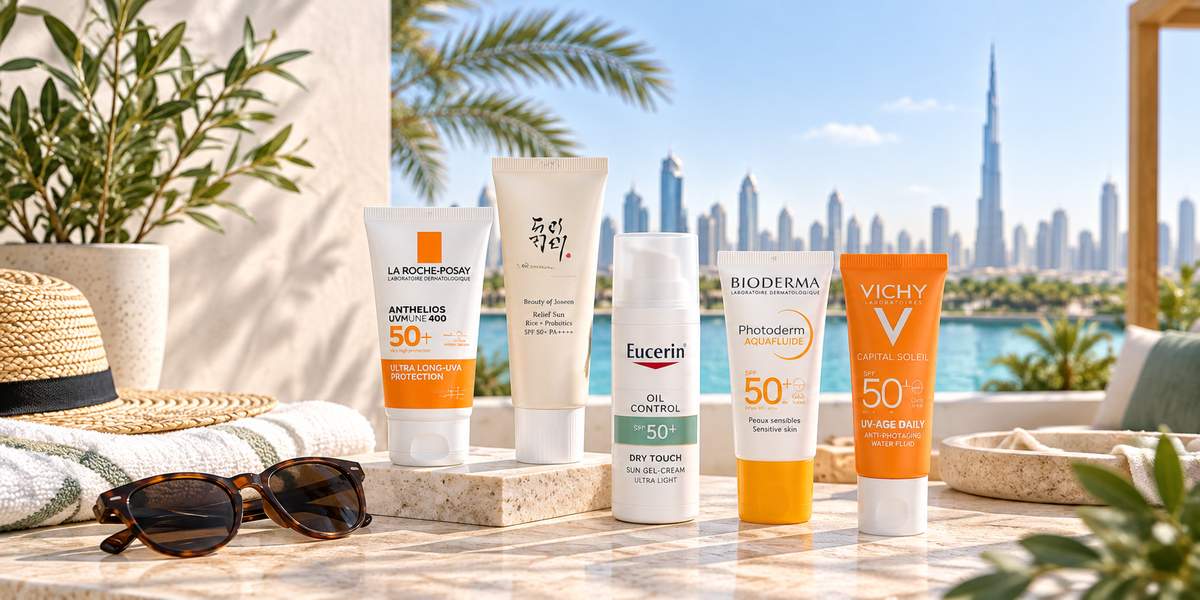
1. La Roche-Posay Anthelios UVMune 400: The Gold Standard in Extreme UVA Defense
Developed at the La Roche-Posay dermatological laboratories in France, the Anthelios UVMune 400 fluid represents one of the most significant pharmacological advances in sun care over the past three decades. Historically, sunscreens suffered from a critical spectral vulnerability between 380 and 400 nm, an ultra-long UVA sub-band that accounts for 30% of total solar UV radiation reaching Earth and penetrates to the deepest layers of human skin. La Roche-Posay's patented Mexoryl 400 filter closes this spectral gap completely.
For individuals with oily and acne-prone skin, the Oil-Control Fluid and Oil-Control Gel-Cream iterations integrate Airlicium technology. These spherical silica micro-particles continuously absorb excess sebum throughout hot, humid afternoons without disrupting epidermal hydration levels. The formulation is water-resistant, sweat-resistant, ophthalmologist-tested (preventing ocular stinging when sweating), and completely free of fragrance. Shoppers can purchase authentic La Roche-Posay stock with verified batch codes via Nice One using promo code CC4 or through Noon with code BEE13.
2. Beauty of Joseon Relief Sun Rice + Probiotics: The Korean Skincare Phenomenon
Korean cosmetic chemistry has revolutionized the global perception of sunscreens by marrying medical-grade UV filtration with luxurious, serum-like textures. Beauty of Joseon Relief Sun: Rice + Probiotics (SPF 50+ PA++++) has earned international acclaim for its effortless application and zero white cast on all skin tones, including Fitzpatrick IV, V, and VI.
The formula replaces heavy occlusive waxes with 30% fermented rice extract and fermented grain probiotics (Lactobacillus and Soybean ferment extracts). In traditional Korean beauty (Hanbang), rice bran water has been used for centuries to gently illuminate complexion, enhance epidermal turnover, and deliver vitamins B, C, and E. Probiotic extracts nourish the skin's commensal microbiome, reducing redness caused by heat and sun exposure. The chemical filters employed—Uvinul A Plus, Uvinul T 150, Tinosorb M, and Iscotrizinol—deliver reliable photostability while leaving a supple, glass-skin radiant finish that doubles as an exceptional makeup primer.
3. Eucerin Sun Gel-Cream Oil Control: 8-Hour Clinical Anti-Shine
Engineered specifically for individuals struggling with severe seborrhea, active comedones, or cystic acne, Eucerin Oil Control Dry Touch SPF 50+ utilizes Advanced Spectral Technology. This system combines broad-spectrum photostable UVA/UVB filters with biological antioxidant defense: Licochalcone A, derived from the roots of Chinese licorice (Glycyrrhiza inflata), neutralizes free radicals triggered by both high-energy visible light (HEVIS / blue light) and infrared radiation.
Furthermore, the formula incorporates L-Carnitine, a natural cellular amino acid that down-regulates sebaceous gland lipid synthesis. Paired with lipid-absorbing spherical pigments, Eucerin delivers an immediate dry-touch matte sensation that persists for up to eight hours even in elevated ambient temperatures. The formula contains no parabens, phthalates, or heavy silicones, preventing follicular clogging and breakout flare-ups.
4. Bioderma Photoderm Aquafluide: Cellular Protection for Sensitive Complexions
French dermatological brand Bioderma approaches sun protection through the lens of ecobiology. The Photoderm Aquafluide SPF 50+ formula relies on the patented Sun Active Defense complex, which enhances the skin's intrinsic self-defense mechanisms against oxidative stress rather than merely forming an external chemical barrier. The complex stimulates cellular production of glutathione peroxidase, the primary intracellular antioxidant enzyme protecting skin cell DNA.
Featuring an innovative water-like fluid texture that transforms into a dry, powder-soft finish upon contact with the skin, Bioderma Aquafluide is particularly recommended for reactive, allergic, or sensitive skin types. It contains zero octocrylene or synthetic fragrances, possesses exceptional ocular tolerance, and is formulated with marine eco-conscious biodegradable filters certified non-toxic to coral reefs.
5. Vichy Capital Soleil UV-Age Daily: Clinical Anti-Photoaging and Pigment Correction
For mature skin or complexions showing signs of solar lentigines, fine expression lines, and loss of dermal elasticity, Vichy Capital Soleil UV-Age Daily Fluid combines high-level photoprotection with potent dermatological actives. Powered by patented Netlock technology, the sunscreen forms an ultra-thin, highly resistant, and homogeneous protective film over the skin that locks UV filters in microscopic gel droplets.
In addition to SPF 50+ and PPD 46 protection, the formula delivers 4% anti-wrinkle peptides (synthesized to stimulate Type I and Type III procollagen synthesis), 2% niacinamide (vitamin B3 to inhibit melanosome transfer from melanocytes to keratinocytes), and Vichy Volcanic Mineralizing Water rich in 15 essential minerals that fortify the cutaneous barrier against airborne micro-pollutants and urban smog.
Mineral vs Chemical Sunscreens: Biological Mechanisms and Skin Compatibility
Understanding the biophysical differences between physical (mineral) and organic (chemical) ultraviolet filters enables consumers to make informed choices based on their unique dermatological profile:
Mineral (Physical) Photoprotective Filters
Mineral sunscreens utilize natural inorganic mineral oxides, specifically Micronized Zinc Oxide and Titanium Dioxide. Contrary to common belief, mineral filters do not function exclusively by reflecting sunlight like tiny mirrors; advanced spectroscopy reveals they absorb approximately 90% to 95% of incoming UV radiation, converting it into harmless infrared thermal energy, while reflecting the remaining 5% to 10%.
- Key Advantages: Chemically inert, non-reactive, and biologically hypoallergenic. They do not cause skin sensitization or allergic contact dermatitis, making them the first-line recommendation for pediatric skin, severe rosacea, eczema, and patients undergoing intensive post-procedural recovery (such as ablative fractional CO2 laser or deep chemical peeling).
- Formulation Limitations: Due to their refractive index, traditional mineral filters can leave a visible white or bluish cast on darker skin tones. To mitigate this, manufacturers utilize micro-fine or nano-sized particles, or add iron oxides to create tinted formulations that also shield against visible light-induced hyperpigmentation.
Chemical (Organic) Photoprotective Filters
Organic sunscreens contain carbon-based aromatic compounds that absorb high-energy UV photons. When UV rays encounter these molecules, the chemical bonds undergo resonance excitation and dissipate the captured energy harmlessly as imperceptible heat. Next-generation European and Asian organic filters (Tinosorb S, Tinosorb M, Uvinul A Plus, Mexoryl 400) offer broad-spectrum absorption without the hormone-mimicking or reactive profiles associated with legacy filters.
- Key Advantages: Exceptional cosmetic elegance. They dissolve seamlessly into transparent fluids, gel-creams, and serums, leaving zero residue, ghosting, or pilling under makeup. They require less product bulk to achieve higher SPF and PA metrics.
- Formulation Considerations: Older generation filters (such as oxybenzone or avobenzone) could occasionally trigger mild stinging around the periorbital eye region or mild folliculitis in hyper-reactive skin. Modern dermatological formulations have largely phased out these legacy compounds in favor of stabilized, modern molecules.
The Golden Rules of Proper Sunscreen Application and Maintenance
Even the most advanced sunscreen formulation will fail to protect against photo-damage if applied in inadequate quantities. Clinical dermatological testing for SPF validation mandates an application density of exactly 2.0 milligrams per square centimeter of skin (2 mg/cm²). In daily consumer practice, most individuals apply between 0.5 and 0.8 mg/cm², achieving less than one-third of the labeled SPF value due to non-linear exponential attenuation.
1. The Two-Finger Measurement Rule
To ensure adequate dosing without requiring laboratory scales, dermatologists universally recommend the two-finger rule. Squeeze two continuous ribbons of sunscreen along the full length of your index and middle fingers. This quantity provides the requisite 1.25 milliliters needed to sufficiently cover the face and neck. A third finger length should be allocated for the ears, decolletage, and back of the neck.
2. Timing and Layering in Your Skincare Regimen
Apply sunscreen as the concluding step of your morning skincare routine, following antioxidant serums (such as Vitamin C / L-Ascorbic Acid or Ferulic Acid) and your lightweight moisturizer. Allow your moisturizer to absorb fully for three to five minutes before applying sunscreen to prevent emulsifier disruption and pilling. Allow the sunscreen film to set for ten to fifteen minutes before applying cosmetic foundations or setting powders.
3. Reapplication Protocols Over Makeup and During Outdoor Exposure
UV filters naturally undergo photochemical saturation and degradation over time, while sweat, sebum, and mechanical friction degrade the protective film. Reapplication every two hours is mandatory during direct sunlight exposure, swimming, or outdoor sports. For individuals wearing cosmetics, reapplication can be seamlessly achieved using SPF 50+ cushion compacts, mineral powder sunscreens with built-in brush applicators, or fine aerosolized setting mists containing photostable filters.
Where to Buy Authentic Medical Sunscreens at the Best Prices with Verified Wafarna Coupons
Given the delicate chemical stability of active sun filters, purchasing sunscreen from authorized, climate-controlled retail partners is crucial. Counterfeit, expired, or improperly stored sunscreen products degrade rapidly in desert warehouses, losing their photoprotective efficacy and potentially causing chemical dermatitis. Wafarna partners directly with the region's most reputable e-commerce platforms to provide authentic stock with verified promo codes:
- Nice One (كود خصم نايس ون): Use code CC4 for up to 20% off all French, European, and Korean sunscreens, including La Roche-Posay, Beauty of Joseon, Eucerin, and Bioderma with 100% authenticity guarantee.
- Noon (كود خصم نون): Apply code BEE13 or PLT160 on Noon Express orders for immediate discounts on dermatologist-tested skincare brands and daily value bundles across KSA, UAE, and Egypt.
- Dar Al Amirat (كود خصم دار الأميرات): Use promo code AM5 for authorized salon-grade and medical pharmacy brands delivered directly across the Kingdom of Saudi Arabia.
- The Body Shop (كود خصم ذا بودي شوب): Use promo code OM3RA8 for clean, cruelty-free Vitamin C glow-boosting sunscreens and hydrating facial mists.
- Izil Beauty (كود خصم إيزيل بيوتي): Apply code MM49 for natural, mineral-enriched photoprotective skincare and organic Moroccan prickly pear seed oils.
Frequently Asked Questions About Choosing and Using the Best Sunscreens
Do I need to wear sunscreen indoors or on cloudy days?
Yes. Clouds only attenuate infrared radiation and visible light significantly, while up to 80% of ultraviolet radiation penetrates cloud cover. Furthermore, standard commercial and residential window glass blocks UVB rays effectively but allows over 60% of long-wave UVA rays to pass through completely. If you work near windows or spend extended periods in front of screens emitting high-energy visible blue light, daily broad-spectrum sunscreen application remains essential.
Can medical sunscreen cause vitamin D deficiency?
Extensive clinical studies published in the British Journal of Dermatology have established that routine daily sunscreen usage in real-world settings does not cause clinical Vitamin D deficiency. No individual applies sunscreen in perfectly uniform 2 mg/cm² layers across 100% of body surface area. Incidental ambient exposure to arms, hands, and casual outdoor intervals provides ample UVB synthesis for healthy 25-hydroxyvitamin D blood serum levels.
What is the shelf life of medical sunscreens once opened?
Check the Period After Opening (PAO) symbol on the product packaging, indicated by an open jar icon with a number (e.g., 6M, 12M). Most high-performance sunscreens remain stable for 12 months after initial seal breach. However, if a sunscreen has been exposed to extreme heat (such as being left inside a hot car glove compartment in Gulf summer temperatures exceeding 50 degrees Celsius), the emulsion can break and active filters will degrade prematurely, necessitating immediate replacement.
How do I remove waterproof sunscreen effectively without clogging pores?
Water-resistant and high-adherence sunscreens are formulated with specialized polymers designed to withstand water and perspiration. Regular foaming cleansers frequently fail to dissolve these polymers completely, leading to congested pores and micro-comedones. Dermatologists advocate the double-cleansing method: first, massage an emulsifying cleansing oil or cleansing balm onto dry skin for sixty seconds to break down the lipid-soluble sunscreen film and sebum, rinse with lukewarm water, and follow with your gentle water-based facial cleanser.
Share this article